
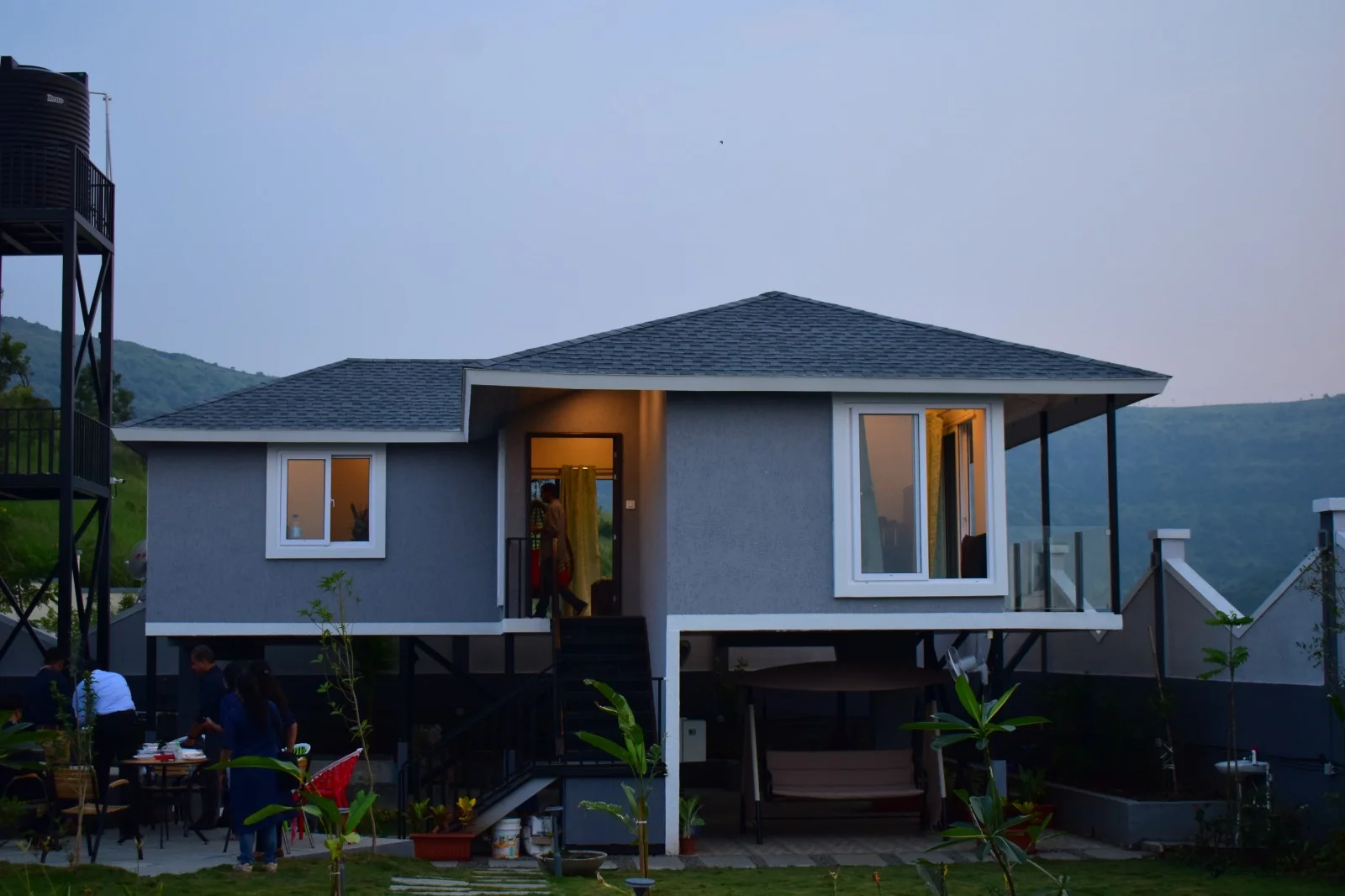
Constructing a home is usually the biggest financial commitment you make in your life. Hence, it demands careful budgeting, meticulous planning, and expert handholding.
Yet, most traditional construction budgets go overboard. The excess amount varies from home to home. While some go 10% over budget, many others cross the 40% mark!
Now, why does this happen? And, why can it also happen to you? Is there a better alternative – something that avoids situations like these? Yes. A prefabricated house.
However, whether a Prefabricated House in Chennai, or prefab homes, Bangalore, how does the prefab option work commercially better than conventional ones? Let us explore.
Traditional Construction vs Prefab Construction – Commercial Realities
Building a home excites everyone. Initially, everything is good and rosy. Developers provide estimates. Timelines are agreed upon. Everything looks great – on paper!
However, as time progresses, many people enter a spiral. Hidden costs surface. Owners shell out more than expected. Situations like these are common in conventional construction. But with prefab development, you can avoid this. So, let us throw some light on the commercial aspect of age-old and prefab construction.
Cost Estimates
1. Traditional Construction
Conventional construction quotes are not fixed prices. They are estimates that rely on provisional sums and allowances. In other words, they are educated guesses for materials, fixtures, labor, and excavation. Therefore, as the project progresses, real costs replace estimates. This often results in the budget ballooning quietly or with a bang!
2. Prefab Construction
Prefab construction involves selling homes with transparent, upfront pricing. They usually have standardized or semi-custom designs. Therefore, the costs are calculated precisely before the construction begins. But what if the home is a fully customized one? Does not matter. The developers carefully work the quote out to avoid hidden costs. As a result, you know what you are paying for. So, no surprise invoices either.
Factory-Controlled Development
1. Traditional Construction
Every building site is unique and has distinct issues. Some include drainage problems, uneven terrain, soil issues, etc. Usually, these problems emerge once the construction process has begun. In situations like these, as a homeowner, you do not have much of a choice. You are obliged to pay the developer to resolve the issues and continue constructing the home. Such hidden, unexpected costs make the home more expensive.
2. Prefab Construction
On the other hand, prefab homes are built in climate-controlled factories. Therefore, the construction process remains immune to environmental delays and material damage. Besides, the process prevents many other technical inefficiencies.
Additionally, factory-based construction allows for bulk material purchasing, uniform quality control, and efficient labor workflows. The result is predictable costs.
Material Price Fluctuations
1. Traditional Construction
Conventional construction material-intensive. It involves the use of diverse materials, each of which contributes to the construction expense. Now, that is understood. But the problem is, the costs of these materials fluctuate often. Therefore, a quote given a month or two ago may not be valid today. Developers usually pass the increased costs to customers, burning a hole in even the most tightly built budgets.
2. Prefab Construction
Prefab construction also involves a significant amount of material. However, usually prefab manufacturers buy material in bulk. Besides, the construction process has minimal to zero delays, safeguarding you from price fluctuations. On the other hand, the assembling and installation process is quick and precise.
Labor Delays and Inefficiencies
1. Traditional Construction
Regular construction involves numerous complexities. Contractor delays, labor problems, and weather-related issues are a few of them. At times, delays are understood. However, when they become uncontrollable, each day of delay costs money!
2. Prefab Construction
Prefab home development progresses more quickly than its conventional counterpart. It is because site preparation and construction go together. Lesser time leads to fewer labor hours and thus, reduced construction costs. Many prefab homes are completed within a week, as opposed to months or years that conventional construction takes.
Design Changes
1. Traditional Construction
No matter how accurate the design is, homeowners often rethink finishes, layouts, or features once the home starts shaping. However, even small changes or minor rework can involve additional material, labor, and thus, cost.
2. Prefab Construction
Prefab homes adopt a very different approach that encourages thoughtful design decisions up front. They allow customization within a controlled system that prevents last-minute changes from spiraling beyond control. As a result, the disciplined design approach safeguards budget and, most importantly, your peace of mind.
Want to discover how your prefab home can become even more cost-effective? Explore how to save money with prefabricated homes.
Prefab Home with Vrisa: Not Just Efficiency and Quality – Financial Confidence!
Conventional construction is complex and unpredictable. Hence, it can incur extra costs. Prefab home development is predictable. It is because the home is built in a controlled environment. Prices are locked in early. The process is streamlined. The result is predictable costs – precisely, a relatively more affordable home.
Now, if you want to reap these benefits with a foreseeable Prefabricated House Price in Pune or other cities in Chennai and Bangalore, Vrisa has got you covered. We are not just prefab manufacturers but partners in translating your vision into reality. Call us at (+91) 9322862232 to connect with our experts and discuss your vision.