
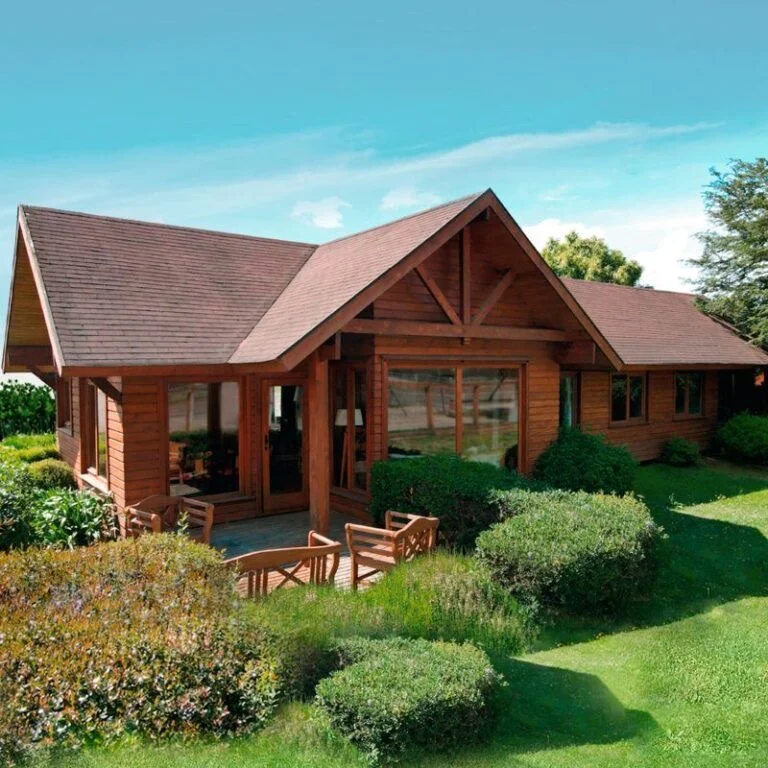
For a long time, the standard investment playbook for high-net-worth individuals in India looked the same a residential flat in a metro city, maybe a commercial unit, and everything else sitting in mutual funds or fixed deposits. That playbook has been quietly changing since 2020.
A growing number of investors are now looking at luxury farmhouses as a serious asset class not as a vanity purchase, but as a property that generates rental income, appreciates over time, and offers personal utility alongside financial return. Within this category, the wooden farmhouse format has drawn particular attention. The question most investors are now asking is simple: do the numbers actually hold up? This post works through that question honestly, covering what a luxury wooden farmhouse costs, what it earns, and what a realistic return picture looks like for the Indian market in 2026.
Why Luxury Wooden Farmhouses Are Gaining Ground as an Asset Class in India
To understand whether a wooden farmhouse makes financial sense, it helps to first understand why this format has started attracting serious investor attention across India.
The Post-Pandemic Shift Toward Experiential and Lifestyle Real Estate
The period between 2020 and 2022 fundamentally changed how a section of India’s population thought about property. Remote and hybrid work arrangements made the idea of a second home near nature not just aspirational but logistically viable. Demand for private weekend retreats within three to four hours of major metros grew sharply, and it has not pulled back since.
Luxury farmhouses fill a specific gap that hotel rooms and rental apartments cannot. Investors own the underlying asset, customise it to their standard, use it personally, and earn from it when they are not there. That combination of utility and income is what has shifted the conversation from lifestyle indulgence to legitimate alternative investment.
Why Wood Specifically — The Material Advantage in 2026
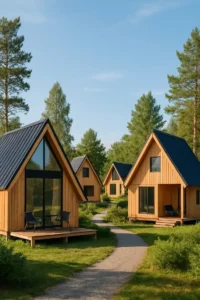
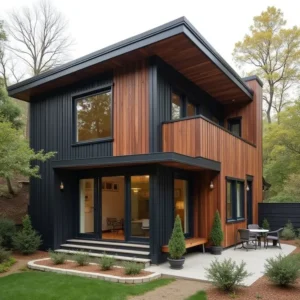
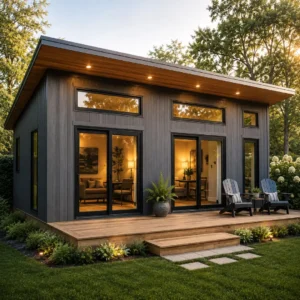
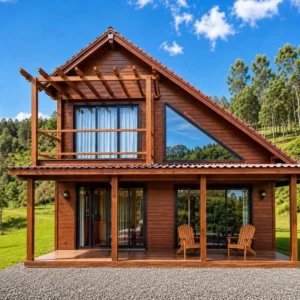
The case for a Wooden Home in the farmhouse segment is not just aesthetic. Engineered timber including cross-laminated timber and glulam has matured significantly as a construction material. Structural concerns about durability and weather resistance that existed with conventional wood a decade ago no longer apply to properly engineered wooden builds.
On short-term rental platforms, wooden farmhouses consistently command higher nightly rates than concrete structures of comparable size in the same location. The material carries a clear premium with renters eco-conscious guests actively seek it out, and the visual appeal drives stronger listing performance. A wooden house can also be operational in three to six months, which significantly compresses the time between capital deployment and first rental income.
Understanding the Cost of a Luxury Wooden Farmhouse in India
Any honest ROI calculation starts with an accurate picture of what a luxury wooden farmhouse actually costs to build and commission in India today.
Land Cost vs Construction Cost — What Drives the Total Outlay
Land is typically the larger component of the total investment. Farmland within 80 to 150 kilometres of a Tier 1 metro ranges from roughly ₹15 lakh to ₹1.5 crore per acre depending on location, road access, and proximity to tourism corridors. Construction for a quality structural grade wooden build runs between ₹2,500 and ₹5,000 per square foot. A 2,000 square foot farmhouse therefore costs between ₹50 lakh and ₹1 crore in construction alone, before site development costs are added.
Coastal locations follow a different pricing curve. The demand for Wooden Houses in Goa has pushed both land values and construction expectations upward compared to inland farmhouse markets. In such locations, the higher land cost is typically offset by stronger nightly rental rates and more consistent year-round occupancy, particularly from international and domestic leisure travellers.
Ongoing Ownership Costs Investors Often Underestimate
In the luxury segment, add-ons are not optional. Solar power, borewell, boundary wall, landscaping, a pool, and a proper access road are baseline expectations for a property that will command premium rental rates. These add ₹20 to ₹40 lakh to the total project cost depending on scope and site conditions.
Wooden structures require periodic waterproofing, pest treatment, and surface maintenance. Budgeting ₹1 to ₹2 lakh per year for upkeep is realistic. Beyond maintenance, property management absorbs 25 to 35 percent of gross rental income, caretaker salary, utility costs, and platform commissions from services like Airbnb or StayVista all come out before the investor sees net return.
Vrisa Innovation’s turnkey delivery model is built around this challenge. Rather than leaving buyers to coordinate contractors, approvals, and fit-out independently, their end-to-end approach covers design, construction, and project commissioning under one roof simplifying both cost estimation and the timeline to occupancy.
Rental Income Potential — What Are Wooden Farmhouses Actually Earning in 2026?
Rental income is where the ROI story either holds together or falls apart and the numbers for well-located wooden farmhouses are more compelling than most investors initially expect.
Short-Term Holiday Rental vs Long-Term Lease — Which Model Works Better?
Short-term holiday rentals generate the highest per-night income. Luxury wooden farmhouses in strong locations command between ₹15,000 and ₹60,000 per night depending on size, location, and season. At a realistic occupancy rate of 50 to 60 percent annually, monthly gross rental income for a well-marketed property ranges from ₹2 lakh to ₹8 lakh.
Long-term leasing to corporates or film production companies offers more predictable income with lower management overhead, though the per-night equivalent is lower. The weekend corporate offsite market has grown substantially since 2022 and represents a consistent demand source for well-equipped private properties.
Which Locations in India Are Delivering the Best Rental Returns?
Proximity to a metro city within three hours by road is the strongest single predictor of consistent occupancy. High-performing locations include Karjat, Igatpuri, and Alibaug in Maharashtra; Coorg and Chikmagalur in Karnataka; the Kasauli corridor in Himachal Pradesh; and the Rishikesh periphery in Uttarakhand. Each of these markets has a demonstrable track record of demand from urban travellers, and that track record is now long enough to support confident yield projections.
Capital Appreciation — Does Farmland and Wooden Construction Hold Its Value?
Rental yield tells one part of the story the other is how much the underlying asset appreciates over a five to ten year holding period.
Farmland Price Trends Near Metro Corridors
Agricultural and conversion land within 100 kilometres of Mumbai, Pune, Bengaluru, and Delhi has seen appreciation of 15 to 25 percent in high-demand pockets between 2021 and 2024. Infrastructure events, expressway completions, new highway access, or a government-declared tourism zone near a property can accelerate appreciation significantly within a short window. A developed, income-generating property consistently appreciates faster than vacant land at resale because the rental track record forms part of the asset’s valuation.
Does the Wooden Structure Depreciate or Add Value?
This is the question most investors ask first, and the answer depends entirely on build quality and maintenance. Conventional softwood degrades with weather exposure and poor upkeep. Engineered timber structures built to specification, treated correctly, and maintained on schedule hold their value over a far longer horizon. Vrisa Innovation operates as a specialist Wooden House Manufacturer in India, using engineered timber systems with surface treatments calibrated to India’s varied climate conditions from coastal humidity to inland temperature extremes. That material and process discipline is what separates a wooden structure that holds its resale value from one that does not.
ROI Calculation — A Realistic Number-Based Breakdown
Putting all the components together, here is what a realistic return picture looks like for a luxury wooden farmhouse investment in India in 2026.
Sample ROI Scenario — Mid-Range Investment Case
Total project investment for a well-located, fully equipped luxury wooden farmhouse: ₹1.5 crore to ₹2.5 crore covering land, construction, and site development. Gross annual rental income at 55 percent occupancy: ₹18 lakh to ₹36 lakh depending on location and nightly rate. Net rental yield after management costs and maintenance sits at 6 to 10 percent per annum on invested capital well above the 2 to 3 percent typical of urban residential rentals. Over a five-year holding period in a high-demand location, land value appreciation of 20 to 40 percent is realistic based on recent comparable corridors. These are indicative figures actual returns depend on location, occupancy, and management quality.
How This Compares to Other Asset Classes
Fixed deposits offer 6.5 to 7.5 percent with no capital appreciation and no personal use value. Urban residential rentals offer 2 to 3 percent yield with limited appreciation in mature markets. The farmhouse investment combines rental income, land appreciation, and personal utility a combination no financial instrument or urban apartment replicates. The trade-off is lower liquidity, which is why it suits investors with a medium to long holding horizon.
Risks to Factor In Before You Invest
An honest ROI analysis includes the risks, and there are specific ones that every prospective farmhouse investor must plan for before committing capital.
Land Title, Zoning, and Conversion Laws
Agricultural land in India cannot universally be used for commercial construction without a conversion process. The rules vary significantly by state and are the most common legal complication in farmhouse investment. Title verification, encumbrance check, and zoning confirmation must precede any purchase without exception.
Investors exploring options in the extended hinterland around a Wooden House in Mumbai’s catchment areas like Karjat, Palghar, and the Pen-Khopoli belt should pay particular attention to Maharashtra’s agricultural land conversion regulations, which require specific approvals before residential or commercial construction can begin. Vrisa Innovation’s site identification process carries out the necessary due diligence before a location is presented to buyers, reducing the legal risk that typically accompanies greenfield farmhouse projects.
Occupancy Variability and Management Dependency
Rental income is seasonal. Monsoon months reduce occupancy in nature-facing locations, and income projections must account for off-peak periods realistically. A poorly managed or under-marketed property will not reach the occupancy rates that make the yield case work. Fire exposure and climate-specific weathering are real risks for wooden structure comprehensive insurance is essential, not an optional line item in the ownership cost.
Many people think whether a Wooden Home in India is worth the investment? Well to clear their views read our blog on “Cost of Wooden Homes in India – Worth the Investment?”
Is 2026 the Right Time to Invest? Market Conditions at a Glance
Timing matters in any investment, and several conditions in 2026 are specifically working in favour of the luxury wooden farmhouse segment.
India’s upper-middle class, the segment most likely to pay premium nightly rates for luxury farmhouse experiences, continues to grow in income and spending confidence. Infrastructure investment is improving road access to locations that were logistically difficult even three years ago, creating new corridors where land is still priced below maturity.
Domestic tourism has expanded consistently as international travel costs have risen, redirecting leisure spending toward high-quality domestic experiences. Wooden farmhouses sit well within this trend: visually distinctive, experientially differentiated, and increasingly sought after by the segment of travellers who pay premium rates without hesitation.
Land in emerging corridors is still pre-maturity priced in 2026. Investors now have enough occupancy and yield data from comparable established markets to make an informed entry decision rather than a speculative one the combination of data confidence and early pricing is a relatively rare window in any asset class.
Note – Investor can get 7 to 8 % hike for structural grade seasoned pine wood in an international market investor treat structural grade pine wood as green gold.
Conclusion
A luxury wooden farmhouse is a smart investment when three things align: the location carries genuine demand, the build quality is high enough to hold its value and command premium rental rates, and the management model is professional enough to consistently achieve the occupancy the yield case requires. When all three are in place, the return profile rental income, capital appreciation, and personal utility combined is difficult to match with other assets available to Indian investors in 2026.
The risk of getting any one of those elements wrong is also real. Location cannot be undone, and build quality set at commissioning cannot easily be corrected later. These are the decisions that determine whether a farmhouse investment performs or underperforms its potential for years.
Vrisa Innovation at the intersection of all three. Their end-to-end model covers site identification, engineered wooden construction, and project commissioning removing the execution complexity that turns what should be a clean investment into a prolonged project management problem. Call us at +91 93228 62232 to know more about it.