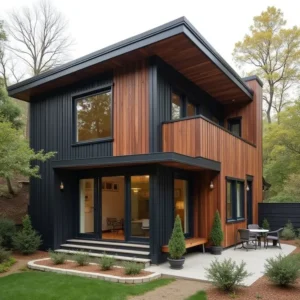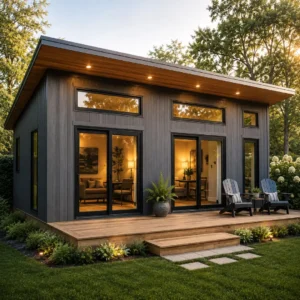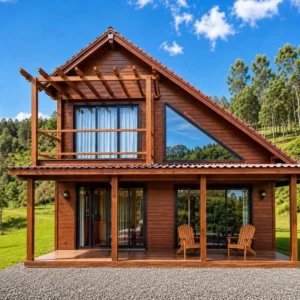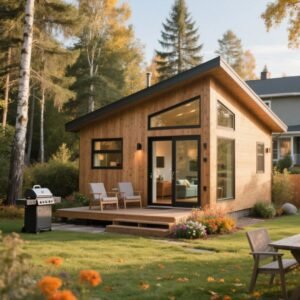

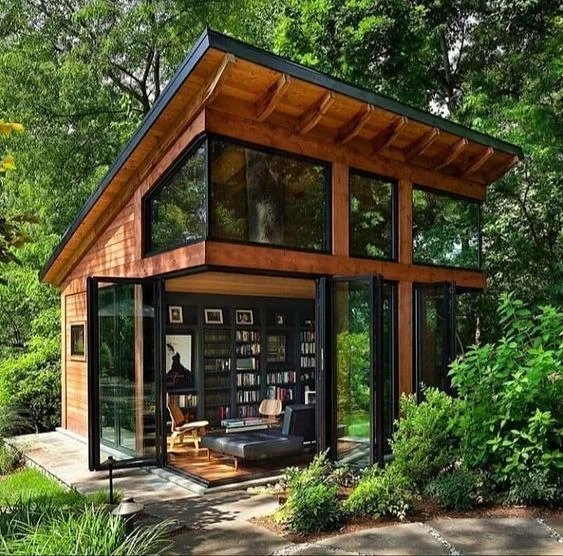
Most conversations about wooden homes in India start and end with the construction quote. Buyers compare the per-square-foot cost against a conventional RCC build, note that the figures are closer than expected, and proceed from there. What rarely enters the initial conversation is the more important question: which option costs less to own over the decade that follows? Please keep in mind comparison of RCC traditional construction and wooden house is not fair , because both product are different in terms of feel , aesthetic and maintenance
That question has a more nuanced answer than either side of the debate typically acknowledges. A pinewood home does not automatically win on a 10-year cost basis, and RCC construction does not automatically lose. The result depends on location, specification, maintenance discipline, and how the comparison is framed. This post puts those costs alongside each other honestly, covering construction, recurring maintenance, energy bills, repair exposure, and the factors that shift the calculation in one direction or the other over time.
10-Year Cost Comparison at a Glance — Pinewood vs RCC
| Cost Category | Pinewood Home | RCC Home |
| 10-yr maintenance | ₹4–8 lakh (inland) ₹6–12 lakh (coastal) | ₹3–6 lakh |
| Energy savings | ₹90,000–1.8 lakh advantage | Baseline (higher bills) |
| Major repairs | Localised, contained if caught early | Cracking, plumbing, roof — often expensive |
| Rental premium | 20–40% higher nightly rate in leisure locations | Standard market rate |
| Construction speed | 3–6 months | 12–18 months |
Construction Cost: Pinewood vs RCC vs Steel Frame — Setting the Baseline
Before comparing maintenance costs over 10 years, the construction cost baseline matters — because the gap between options at build stage determines how much the long-term comparison needs to close.
Cost Per Square Foot — What Each Construction Type Actually Costs
Pine Homes built with properly graded and treated timber typically cost between ₹2,000 and ₹4,500 per square foot in India at mid-range specification, including structure, wall panels, and a basic interior fit-out. RCC brick-mortar construction runs between ₹1,800 and ₹3,500 per square foot for comparable quality. Steel frame construction falls between ₹1,500 and ₹3,000 per square foot for the structure, though finishing costs bring the total closer to RCC. These are indicative ranges actual costs depend on location, design complexity, finishes, and site conditions, and the gap between the cheapest and most expensive option within each category is often wider than the gap between categories.
What the Upfront Cost Difference Actually Buys
Pinewood construction typically costs 10 to 25 percent more per square foot than a comparable RCC build at mid-range specification. But the comparison is not straightforward on a like-for-like basis. Timber construction delivers thermal performance, character, and construction speed that RCC at the same price point does not. A pinewood home is typically operational in three to six months. A comparable RCC build takes 12 to 18 months. That compression in construction time reduces the interest cost for buyers who are borrowing to build, and it delivers the home to the owner sooner, a financial and practical advantage that sits outside the per-square-foot comparison but belongs in the full calculation.
Annual Maintenance Costs — What Each Construction Type Demands Over a Decade
Maintenance cost is where the 10-year comparison most clearly separates pinewood from conventional construction and where the assumptions buyers make at the quoting stage most commonly turn out to be incomplete.
Pinewood — Year-by-Year Maintenance Reality
Years one to three represent the lowest maintenance period for a well-built pinewood home. Annual inspection costs run between ₹8,000 and ₹20,000, with minor exterior touch-up as needed. Years three to five bring the first full exterior recoating cycle — UV-resistant stain or paint reapplication, joint sealant inspection, and replacement at critical junctions. Cost for this cycle runs between ₹60,000 and ₹1.5 lakh depending on home size and location. Years five to ten see the second recoating cycle, annual termite inspection and preventive treatment at ₹8,000 to ₹25,000 per year, and maintenance of exposed deck and external timber features at ₹20,000 to ₹75,000. Ten-year total maintenance for a well-built, properly treated pinewood home sits between ₹4 and ₹8 lakh in inland locations, and higher in coastal zones.
RCC Construction — What Maintenance Looks Like Over the Same Period
Exterior painting and waterproofing reapplication on a standard RCC home is required every three to four years, at ₹40,000 to ₹1.2 lakh per cycle for a medium-sized home. Years five to ten bring crack inspection and repair a near-universal requirement on Indian RCC homes due to thermal expansion, foundation settlement, and monsoon-driven moisture cycling. Plumbing maintenance in concealed pipe runs, roof waterproofing renewal, and paint cycles contribute further. Ten-year total maintenance for a standard RCC home sits between ₹3 and ₹6 lakh. The gap between RCC and pinewood maintenance cost is real but smaller than most buyers assume, and it narrows further when energy savings are added to the picture.
Energy Costs — Where Pinewood Homes Build a Compounding Annual Advantage
The maintenance cost comparison is close enough that it rarely settles the 10-year calculation on its own energy cost is where pinewood construction builds a cumulative financial advantage that RCC cannot match.
Why Wood Outperforms Concrete on Thermal Performance
Timber has significantly lower thermal conductivity than concrete or brick. Wood walls transfer heat more slowly in both directions, keeping interiors cooler in summer and warmer in winter without mechanical assistance. Concrete and brick absorb daytime heat and re-radiate it at night. In India’s hot-humid climates, this drives extended air conditioning use that timber construction does not require to the same degree. Properly insulated pinewood walls achieve thermal performance levels that are difficult to replicate with conventional RCC at comparable wall thickness.
What the Energy Saving Looks Like Over 10 Years
A pinewood home in a hot-humid coastal location can reduce monthly air conditioning load by 20 to 35 percent compared to an equivalent-sized RCC home with standard brick walls. At an average monthly AC bill of ₹3,000 to ₹6,000 in an RCC home, a 25 percent reduction represents ₹750 to ₹1,500 saved per month ₹90,000 to ₹1.8 lakh over 10 years on energy alone. In hill stations and cold climate locations, the insulation benefit reduces heating costs. These figures depend on insulation specification, window glazing, orientation, and local climate they are indicative estimates for planning, not guarantees.
Climate-Specific Cost Variables — How Location Changes the Calculation
India’s climate diversity means the 10-year cost calculation for a pinewood home varies significantly by region and the comparison that holds for Pune may produce a different result for Coorg or Alibaug.
High-Humidity and Coastal Locations — Higher Treatment Cost, Higher Energy Saving
Coastal Maharashtra, Goa, Kerala, and Karnataka present the most demanding conditions for any wooden structure. Salt-laden air, persistent humidity, and elevated pest activity accelerate exterior surface degradation, compressing recoating cycles from every four to five years to every two to three years. Annual treatment costs in these locations rise to ₹30,000 to ₹60,000. The counterbalance is that the energy saving advantage of timber over concrete is also highest in hot-humid coastal climates. Net position for coastal builds: higher maintenance cost than inland, but offset significantly by energy savings and the rental premium that a well-finished wooden home commands in high-demand leisure markets.
Hill Stations and Dry Inland Climates — Where Pinewood Has the Clearest Advantage
Pinewood Cottages in locations like Coorg, Ooty, Shimla, Mussoorie, Kasauli, and Munnar operate in lower pest activity environments with reduced UV exposure and no salt air. Maintenance costs in these locations are lower than coastal equivalents, the insulation performance advantage over RCC is significant in cold months, and the aesthetic premium these homes command in the leisure and holiday rental market is among the highest in any Indian climate zone. Vrisa Innovation has delivered pinewood home projects across India’s varied climate zones, adjusting treatment protocols, insulation specification, and foundation design for each location rather than applying a single standard to every site.
Repair and Replacement Costs — What Each Construction Type Is Vulnerable To
Beyond routine maintenance, every construction type carries repair vulnerabilities that appear over a 10-year period and knowing what each is prone to changes the long-term cost comparison significantly.
Pinewood — What Goes Wrong and What It Costs to Fix
Localised timber decay at poorly sealed junctions or areas of standing water contact is the most common structural repair in a wooden home. Caught early in an annual inspection, section replacement typically costs ₹20,000 to ₹80,000. Left until structural involvement, costs escalate to ₹2 to ₹5 lakh. Joint opening due to seasonal moisture cycling is addressed through sealant reapplication at annual inspection and is minimal in cost when caught early. Deck and external timber feature replacement is typically required once in a 10-year window for exposed outdoor elements at ₹1 to ₹3 lakh depending on scope. The pattern here is consistent: small catches cost very little; problems that are missed through infrequent inspection become expensive.
RCC Construction — What Goes Wrong and What It Costs to Fix
Hairline and structural cracking is near-universal in Indian RCC homes over a 10-year period, driven by thermal cycling, foundation settlement, and monsoon-season moisture movement. Repair costs range from ₹10,000 for cosmetic crack injection to ₹3 to ₹8 lakh for structural intervention. Concealed plumbing leaks in cast-in pipe runs are expensive to diagnose and repair without breaking finished walls and floors a cost that arrives without warning. Flat roof waterproofing failure is one of the most common repair categories in Indian RCC homes, requiring renewal typically every five to seven years at ₹50,000 to ₹2 lakh depending on roof area. RCC’s repair costs are less frequent but often higher-impact when they occur.
The 10-Year Cost Summary — Putting the Numbers Together
Bringing construction cost, annual maintenance, energy savings, and repair exposure together produces a clearer picture of which construction type is cheaper to own over a 10-year horizon.
The Numbers for a 2,000 Sq Ft Home — Indicative 10-Year Comparison
Construction cost premium for pinewood over RCC at mid-specification: approximately ₹15 to ₹25 lakh. Ten-year maintenance difference with pinewood higher by: ₹1 to ₹3 lakh in inland locations; broadly comparable in coastal locations when energy savings are factored in. Ten-year energy savings advantage for pinewood in a hot-humid climate: ₹90,000 to ₹1.8 lakh. Net 10-year cost position: pinewood costs more to build and marginally more to maintain, but the ownership cost gap closes materially when energy savings are included. These are planning-level estimates. Actual figures depend on location, specification, climate zone, and occupancy pattern.
Where the Value Calculation Shifts in Pinewood’s Favour
Holiday rental use changes the picture most dramatically. Pinewood homes in leisure locations command 20 to 40 percent higher nightly rates than RCC equivalents in the same area. A single year of higher occupancy income at that premium can offset several years of higher maintenance cost. Resale premium in eco and lifestyle segments is a second factor: increasing buyer preference for sustainable construction translates into measurable resale price differentiation in markets where RCC inventory is abundant. Faster construction timeline three to six months versus 12 to 18 months means the owner has the home available for personal use or rental income sooner, compressing the effective payback period on the construction premium.
What Determines Whether Your Pinewood Home Stays on the Right Side of That Comparison
The 10-year cost advantage of a pinewood home is not automatic it depends almost entirely on decisions made at the construction stage that cannot be corrected cheaply once the home is built.
The Specification Decisions That Drive Long-Term Cost
The financial case for Pinewood Homes over a 10-year horizon rests on four construction-stage decisions that determine whether the structure performs as designed or begins deteriorating ahead of schedule. First: wood grade and moisture content at installation. Kiln-dried, properly seasoned timber expands and contracts minimally with seasonal humidity changes. Green or inadequately dried timber opens joints, warps, and requires significantly more frequent maintenance across the full 10-year window. Second: treatment specification at build stage. Anti-termite application, UV-resistant exterior coating, and moisture sealant at all penetrations and junctions add ₹2 to ₹5 lakh at construction but save multiples of that over time. Third: insulation specification. The energy saving comparison in this post assumes correctly specified insulation a poorly insulated pinewood home loses the thermal performance advantage. Fourth: foundation and moisture management. Adequate plinth height, correct drainage detailing, and no direct timber-to-ground contact are the most consequential decisions for long-term structural integrity.
How Vrisa Innovation Approaches Specification for Long-Term Ownership
Vrisa Innovation uses kiln-dried, structurally graded pinewood with documented moisture content not green timber sourced at minimum cost to meet a headline price. Treatment protocols are location-specific: coastal builds receive marine-grade exterior coatings and enhanced anti-termite treatment; hill station builds are specified for moisture cycling and temperature variation. Insulation systems are designed for the climate zone of the site, not applied as a one-size standard across all projects. Pre-project site assessment covering soil conditions, drainage, foundation requirements, and utility access is completed before the structural quote is issued so the project budget reflects actual site conditions rather than an average.
Conclusion
A well-built pinewood home is cost-competitive with RCC construction over a 10-year ownership period when energy savings, rental premium, and resale value are included in the comparison. It costs more to build and marginally more to maintain in most inland locations. It does not cost significantly more to own when the full picture is considered. The risk is not the concept, the risk is a poorly specified pinewood home that exceeds RCC maintenance costs substantially and loses the thermal performance advantage that makes the financial case work.
The 10-year comparison holds when the construction-stage decisions are made correctly. That is a specification and builder selection decision, not a materials decision. The difference between a pinewood home that performs on this comparison and one that does not is determined before the first structural element is installed.
Considering a pinewood home and want to understand the full cost picture before you commit?
Vrisa Innovation builds pinewood homes to the specification that makes the 10-year cost case hold kiln-dried timber, location-specific treatment protocols, correctly specified insulation, and a transparent project scope before any contract is signed. Call us on +91 93228 62232 to know more about it and our team will guide you through the process.